
Reflections on Settling In

Reflections on Settling In

We had our Settle In practice this past Saturday, and something really struck me during our time together. We were looking at the Perceived Stress Scale, and a common theme emerged: Stress doesn’t just live in our minds; it lives in our capacity to be with other people.

When we feel “pushed to the edge” by life, our ability to stay in connection—what we call Relational Stamina—is often the first thing to go.

Whether you were able to join us live or you spent your Saturday tending to other things, I wanted to share the reflection guide we used.

This isn’t a “to-do” list. It’s a space for you to look at your stress numbers and ask: What is this doing to my voice? What is this doing to my relationships?

[Download the PSS Reflection PDF]

Review the Perceived Stress Scale Questions here

1. The “Current Climate” Check-In

Looking at the scale’s questions, which specific area felt the most “uncontrollable” this week? (e.g., your schedule, an interpersonal tension, or internal self-talk?)

2. The Body’s “Volume Knob”

When your stress markers are in this range, what happens to your physical voice during a disagreement? Does it tighten/clench? Does it disappear (freeze)? Or does it get louder/sharper as a way to “over-protect”?

3. The Connection Cost

When you are at this stress level, how does it impact your ability to stay “in connection”? Does the stress make you want to move toward others for help, or move away into isolation?

4. One Small “Settle”

Based on your reflections today, what is one “micro-boundary” or practice you can explore setting in the next 24 hours to lower the pressure by just 1%?

Example: Turning off phone notifications for an hour, 
or saying “I need 10 minutes before we talk about this.”

Understanding our stress is the first step in moving from disconnection back into connection. It’s the “why” behind the “how.”

Next week, I’m going to share a bit more about the framework I use to navigate these moments when the “voice gets stuck”—the actual theory behind building a relationship that can handle the stress.

Take a deep breath today. You’re doing better than you think.

Warmly,

LaShawn

Your Relational Pause: Why conflict feels so draining, even when nothing “big” is happening

Your Relational Pause: Why conflict feels so draining, even when nothing “big” is happening

Sometimes what wears us down in relationships isn’t a big argument or a dramatic rupture. It’s the ongoing tension – the conversations we avoid, the things we carry quietly, the effort it takes to stay regulated around certain people or situations.

Relational stress often builds slowly. When conflict doesn’t feel safe, resolved, or clear, our bodies stay on alert. Over time, that vigilance can feel exhausting, even if nothing “bad” is happening on the surface.

This month, we’ve been exploring relational patterns — what repeats, what becomes clearer, and what our relational systems may be asking for, without pressure to change everything at once.

Stress is often the signal that our capacity is being quietly taxed.

Some people notice that what helps most in these moments is nourishment: remembering what connection feels like when it goes well. Others find relief in building stamina: learning how to stay present and engaged without escalating or shutting down.

A few resources, if it’s supportive:

And here’s this week’s reflection. It is an invitation to notice how stress shows up for you – not to fix it, but to understand its impact.

These weekly reflection questions are offered as a gentle pause, not an assignment. You don’t need to answer all of them, write anything down, or come to a conclusion. They’re here to help you notice what’s already shaping your relationships and well-being, and to orient toward what feels supportive right now.

Reflection:

  • Notice: Where do I feel relational stress lingering, even when nothing “big” is happening?
  • Name: How does ongoing tension affect my energy, patience, or availability?
  • Orient: What helps me recover or regulate after relational stress?

We’ll continue exploring stress and capacity together as we move into February. As always, you’re welcome to take this at your own pace.

Warmly,
LaShawn

Most Sexual Assault Survivors have said these words & know this feeling.

Most Sexual Assault Survivors have said these words & know this feeling.

This post contains affiliate links and is going to reference the experience of sexual assault.

It includes a reference to an article discussing surviving and attempting to hold a person accountable for sexual assault.

“I just kind of froze like a deer in headlights, just frozen. I knew it was happening. I could feel it,” she added. “I remember trying to fix my eyes on a spot on the wall and just trying to avoid seeing his face as he was assaulting me, just waiting for it to be over.”

In my experiences, both personally & professionally, this quote embodies the most common psychoemotional experience of assault.

So many people permit or perform sexual activity in order to survive sexual assault.

So many people permit or perform sexual activity in order to survive sexual assault. This is why we cannot blame victims for surviving assault because of the fact that sex happened. Once we understand that sex is sometimes the only way to survive assault, we can stop blaming people for doing what was necessary to survive the moments.

Why didn’t s/he/they fight back? Fighting back is a response you grow into over time. It is rarely the first response in each situation where assault happens.

It’s called “fight, flight or freeze” for a reason. Many freeze. Many flee psychologically (ie disassociate). Few of us fight the first time. If only the first time was the only time. Usually it is not and so we start learning to fight.

Once people start fighting, we then see victim blaming by focusing on the fighting back/self defense and not the assault necessitating self defense.

Believe victims.
Understand that sex can be a survival tactic.
Fighting isn’t always the first available response.
Support survivors.
Hold abusers accountable.

If you want to start to understand the reasons why it is best to address abuse with abusers – read Lundy Bancroft’s book. It’s a game changer!


Nobody’s Ready for Marriage

Nobody’s Ready for Marriage

Nobody’s Ready for Marriage

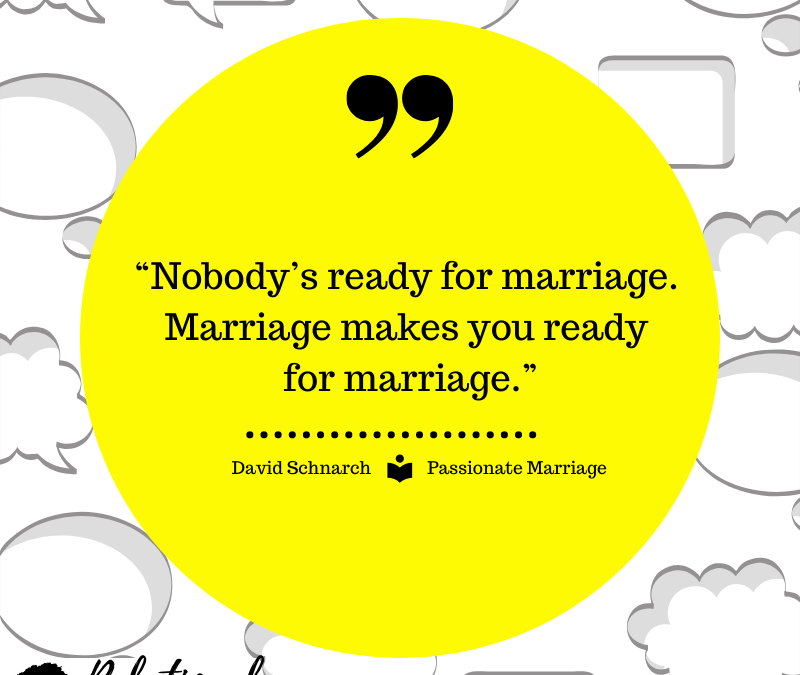
One of my favorite relationship books is “Passionate Marriage” by Dr David Schnarch because of this quote: “Nobody’s ready for marriage. Marriage is what makes you ready for marriage.” It’s in the introduction of the book.

I started reading it a little before I got divorced because I didn’t want to get divorced.

I started reading it a little before I got divorced because I didn’t want to get divorced.

As a therapist, we tend to think we have the skills to avoid marital calamities like divorce.

In my relationship, we had survived unemployment, underemployment & grad school, we could survive infidelity, right?

We could have, if we’d gotten help,  if we really wanted to change ourselves and change our relationship to meet both of our needs.

That discussion is a post for another day.

Passionate Marriage was a beginning of more awareness building for me. It was a text that did a lot to me and for me. (Books are why I affectionately call myself the Bookworm Therapist. I believe that I can’t be the only person to go through what I’m going through and someone somewhere else has probably gone through it and ideally writte a book, article, song or poem about it. At least I hope for it with crossed fingers and toes, because the alternative is unsettling to say the least!) 

Primarily, it was one of the important first steps I really needed in the continued development of my self and identity as a person. It made me become the wife in my relationship instead of the therapist I’d been operating as for the past 12 years in being connected to the kid’s dad (TKD).

It’s a book primarily about differentiation of self and within relationships. It’s become one of the books I reference in couples work & recommend when working in the family relational space generally.

I’ll share some of my favorite phrases, pages & takeaways in future posts.

Cyber Monday 2019 – Couples Bundle

Cyber Monday 2019 – Couples Bundle

Couples Session Bundle

Are upcoming holidays putting stress on your relationship? Are there undercurrents in your relationship that are creating disconnection? Why not commit yourself to some time to engage your experience in a safe, neutral environment?

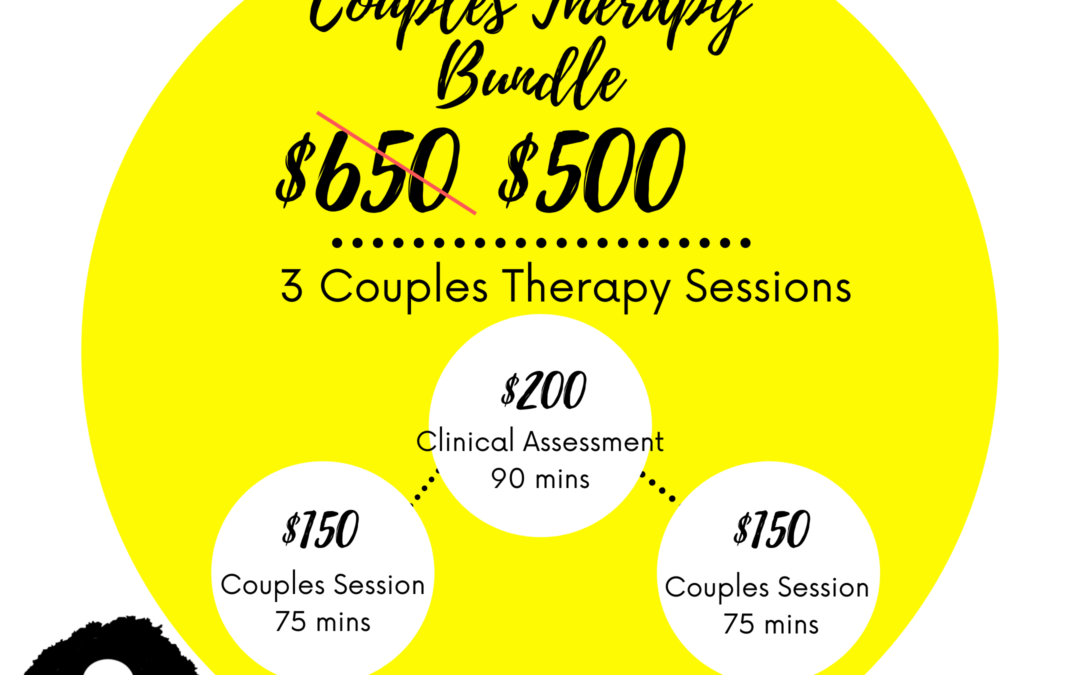
Here’s what the couple’s bundle includes:

1. One (1) 90-minute Clinical Assessment
A 90-minute clinical assessment will give two partners a chance to hear and be heard.
– 15 minutes will be spent with the couple together
– 30 minutes is for each partner to be seen individually
– 15 minutes will be used to recommend treatment options to the couple.

2. Two (2) 75-minute couples sessions

*This offer is currently for Utah residents only