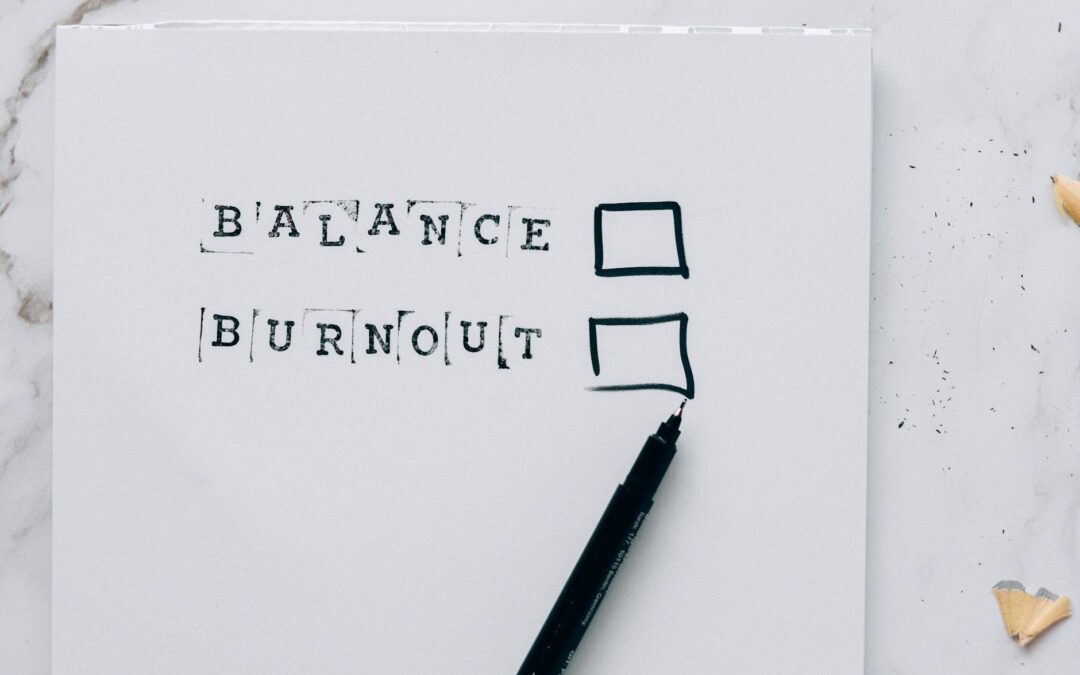
We often think of burnout as something that happens when we work too many hours.
But usually, it’s about carrying a load without the support to sustain it.
Whether it’s being the mediator between two siblings at home or the “middle man” between a difficult client and a contractor at work, triangulation (the technical term for being stuck in the middle)is exhausting.
Contrary to popular ideas, burnout isn’t just a mood; it’s a measurable experience.
As you look at your own capacity this week, I invite you to notice if you are feeling these three specific markers:
Exhaustion. Fatigue at the very idea of work (or home labor), chronic tiredness, and trouble sleeping. Unlike depression, these often lift when you are away from the source.
Depersonalization. A loss of empathy or a sense of “dehumanization.” You might feel cynical, detached, or find yourself withdrawing into yourself to survive social contact.
Reduced Personal Achievement. Assessing yourself negatively and feeling unable to move the situation forward. You begin to doubt your genuine ability to accomplish things despite your best efforts.
Before we can alleviate the burnout, we have to find our own “Seat” again so we can step out of the middle without feeling like we’re abandoning the team.
This Saturday, we’ll be Settling In to our seats together and exploring how and where burnout is showing up.
Are you ready to build Relational Stamina that protects you and your most important connections?
We’ve spent this month settling in and finding what anchors us when our containers are overflowing. Last week, we explored remembering what we’re fighting for when conflict shows up in our relationships.
But what happens when the conflict doesn’t go away?
What happens when you need more than just a moment of breath to navigate a relationship that feels like it’s pulling apart?
This question is why I created a course called “Relational Stamina: Skills for Sustaining Connection Across Difference.” It was the foundation I built on to launch the STAY Framework in 2025.
Most of us don’t want to be rude, mean or impulsive when it comes to maintaining relationships, even when they’re challenging. In the Relational Stamina course, I differentiate the options to help us maintain, engage and invest in relationships.
The STAY framework details the relational navigation process, but this course is where it all started.
It is an 8-lesson workshop designed to move you from noticing reactive disconnection in yourself to the beginnings of building relational stamina with others.
We go beyond the initial disconnect that conflict creates and move into the full framework of building relational resilience in your most important connections.
If you are tired of the “flight or fight” cycle and you’re ready to build the capacity to stay present – even when it’s hard – I’d love to see how this course works for you.
Our next Settle In Practice is coming up soon. We’ll be exploring identifying and alleviating burnout in our home and work relationships. If you want to join us next month, here’s the link to save your seat.
your relational pause if conflict is unavoidable, what are we fighting for?
Last week, we spent some time looking at our “stress containers”– full of those uncontrollable pressures that make our voices feel stuck and our connections feel strained.
It’s heavy work.
We also explored how heaviness is helped by finding what provides balance.
So today, I want to offer a pivot.When we talk about Relational Stamina, we aren’t just talking about surviving the hard days. We are talking about cultivating the energy that makes a relationship feel worth the effort.
In Relational-Cultural Theory, we identify The 5 Good Things that happen when a connection is working: Zest, Clarity, Empowerment, a Sense of Worth, and a Desire for more relationships.
If the stress of conflict on your side of the screen has crowded these out lately, I wrote a guide to help you find them again. My ebook, The 5 Good Things, is a reflective journey designed to help you identify and grow this positive core. [Link: Get the 5 Good Things Ebook – $12.99]
Before we tackle the big conflicts, we have to remember what it feels like to be on the same team.
to the balance that good things bring, LaShawn
P.S. If you missed this month’s Settle In Practice and want to join us next month, here’s the link to save your seat.[Join the Settle In Practice]
If a slower email pace would serve you better, you’re welcome to switch to monthly or quarterly updates [here].
We had our Settle In practice this past Saturday, and something really struck me during our time together. We were looking at the Perceived Stress Scale, and a common theme emerged: Stress doesn’t just live in our minds; it lives in our capacity to be with other people.
When we feel “pushed to the edge” by life, our ability to stay in connection—what we call Relational Stamina—is often the first thing to go.
Whether you were able to join us live or you spent your Saturday tending to other things, I wanted to share the reflection guide we used.
This isn’t a “to-do” list. It’s a space for you to look at your stress numbers and ask: What is this doing to my voice? What is this doing to my relationships?
Looking at the scale’s questions, which specific area felt the most “uncontrollable” this week? (e.g., your schedule, an interpersonal tension, or internal self-talk?)
2. The Body’s “Volume Knob”
When your stress markers are in this range, what happens to your physical voice during a disagreement? Does it tighten/clench? Does it disappear (freeze)? Or does it get louder/sharper as a way to “over-protect”?
3. The Connection Cost
When you are at this stress level, how does it impact your ability to stay “in connection”? Does the stress make you want to move toward others for help, or move away into isolation?
4. One Small “Settle”
Based on your reflections today, what is one “micro-boundary” or practice you can explore setting in the next 24 hours to lower the pressure by just 1%?
Example: Turning off phone notifications for an hour, or saying “I need 10 minutes before we talk about this.”
Understanding our stress is the first step in moving from disconnection back into connection. It’s the “why” behind the “how.”
Next week, I’m going to share a bit more about the framework I use to navigate these moments when the “voice gets stuck”—the actual theory behind building a relationship that can handle the stress.
Take a deep breath today. You’re doing better than you think.
Using the Perceived Stress Scale to find your ground.
We’ve all been there. A conflict starts—maybe it’s a sharp comment from a partner or a misunderstanding with a family member—and suddenly, you can’t find your words. It’s not that you don’t have thoughts; it’s that it feels physically unsafe to let them out.
Last month, we looked at our overall wellbeing with the WHO-5 Index. This month, I want to look at a different metric: Stress. Specifically, how much of your life feels “uncontrollable” or “overloading” right now? When we feel like we can’t speak up during conflict, it’s often because our internal “stress bucket” is already full. We aren’t just reacting to the person in front of us; we are reacting to a nervous system that is tapped out.
When we feel like we can’t speak up during conflict, it’s often because our internal “stress bucket” is already full. We aren’t just reacting to the person in front of us; we are reacting to a nervous system that is tapped out.
This is why I’m hosting this month’s Settle In practice. We are going to walk through the Perceived Stress Scale together. It’s not just a test; it’s a map to help you understand why you might be “freezing” instead of “speaking.”
I’d love for you to join this session. Let’s create a little more room in that stress bucket so you can find your voice again.